I Am Bird
- 4.7
- Rating
- 5.00M
- Installs
- Free
- Price

 Analysis by App-foxy
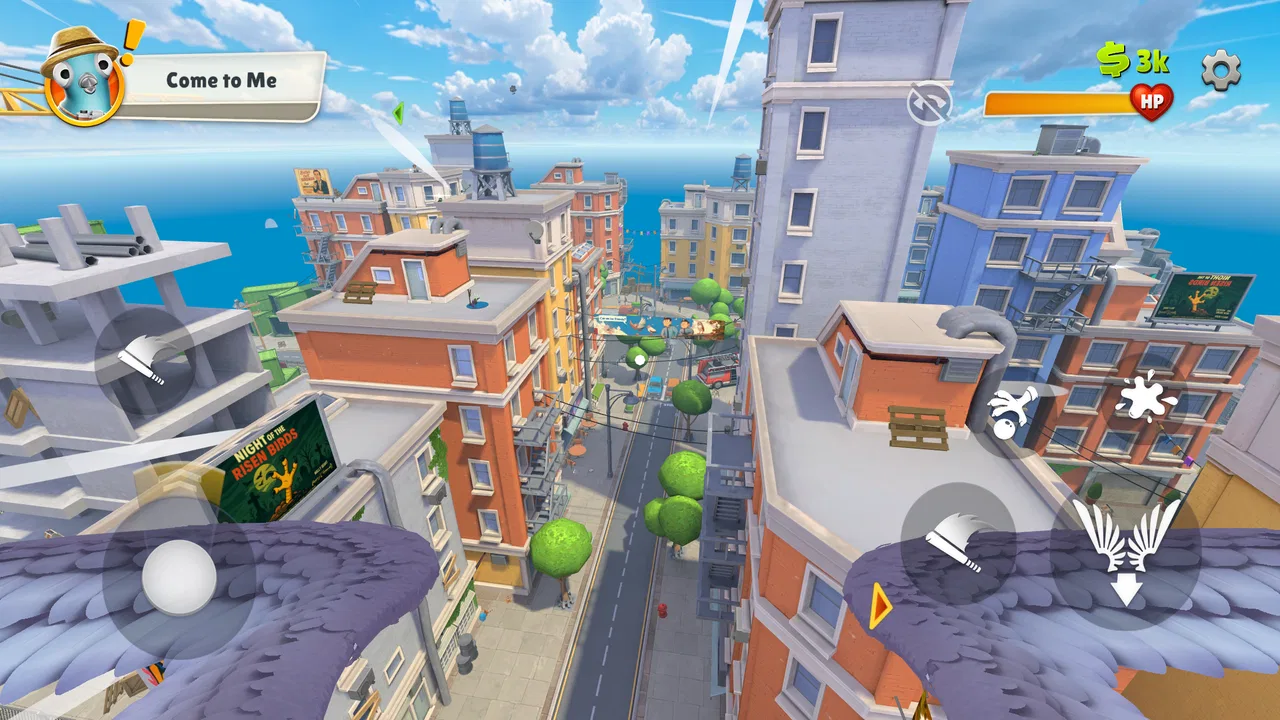
I Am Bird is the kind of role-playing game that makes a strong first impression by giving me a simple fantasy to understand immediately: I take control of a bird, fly around, and create trouble. That idea is much lighter than the usual fantasy adventure, dungeon crawler, or character-collection game, and that difference is exactly why it caught my attention. Developed by Estoty, it is free to play, aimed at a Teen audience, and currently listed as version 1.0.1.
After spending time with it, my main question was not whether the concept is amusing. It is. The more useful question is whether the fun survives after the novelty of being a mischievous bird wears off. My answer is fairly positive, but qualified: this is best approached as a quick, playful escape rather than a deep role-playing commitment. Its lasting value depends on whether you enjoy experimenting with movement and chaos more than chasing a traditional progression system.
Why the first week feels so entertaining
The opening appeal comes from the contrast between the familiar and the ridiculous. Flying is normally associated with freedom, exploration, or graceful movement. Here, the bird identity gives that movement a cheekier purpose. I found myself paying attention not only to where I could go, but also to what kind of disruption I could cause once I got there. That shift makes ordinary spaces feel more interesting than they might in a conventional adventure game.
You May Also Like

 Blood Strike: 2.5 Anniversary
Blood Strike’s Loadouts Turn Every Drop Into a Tactical Gamble
A close look at Blood Strike’s custom loadouts: how fast access to signature weapons reshapes its battle royale rhythm, rewards preparation, and narrows the gap between fights.

 Pandora - Music & Podcasts
Pandora’s Music Is Easy to Start, but Harder to Recover
Pandora’s strength is its low-effort path from a seed to a station. Its weak spot is how much confidence it asks you to place in connection, setup, and quiet recovery.

 8 Ball Pool
 Is Built on Rivalries, Rematches, and Routine
A close look at the rivalries, rematches, shared routines, and unanswered safety questions that turn a quick pool match into a persistent mobile community.

 Samsung Music
’s Quiet Strength Is Playing What You Already Own
Its reach comes less from spectacle than from dependable access to a personal library. That simplicity is both the app’s strongest retention engine and its ceiling.

 AccuWeather: Weather Radar
AccuWeather Review: A Quick, Clear Forecast for Everyday Decisions
For everyday plans, the best forecast is the one you can understand quickly. AccuWeather makes rain timing, radar, and local conditions easy to act on, with a few trade-offs.

 Hill Climb Racing
Why Hill Climb Racing Still Turns Crashes Into One More Run
A tiny car, a bumpy hill and one more upgrade: Hill Climb Racing keeps resurfacing because its simple chaos makes every near-miss feel personal.
More From Our News Desk



The best early sessions are the ones where I stop trying to play perfectly. Instead of treating every moment as a mission to complete efficiently, I experiment. I approach an area from a different direction, test how much trouble I can create, and see whether a situation becomes funnier when I take a less obvious route. That trial-and-error rhythm gives the game its personality.
This is also why the game works well in short bursts. If I have a few minutes while waiting for an appointment or taking a break, the bird premise is easy to resume. I do not need a long explanation before I remember what I was doing. The central action is clear enough that the game can deliver a small dose of entertainment without demanding a full evening.
At the same time, the unusual premise should not be mistaken for endless variety. The first sessions benefit from discovery because I am still learning the possibilities of flying and causing mischief. Once I understand the basic rhythm, some of that surprise naturally fades. The game needs my own curiosity to keep the early magic alive.
Movement is the real test of patience
For me, the most important part of the experience is not the role-playing label. It is how comfortable the flying feels. When movement responds in a way I can predict, even a small objective becomes enjoyable because I am actively choosing my approach. When my intention and the bird's movement do not line up, the same situation can feel more like correction than play.
That creates an important trade-off. Players who enjoy learning a movement style through repetition may find satisfaction in gradually becoming more confident. Players who expect immediate precision may become irritated sooner, especially when a failed attempt feels caused by control friction rather than a bad decision. I would recommend giving the game a fair adjustment period before deciding whether its handling suits you.
A useful habit is to treat the first attempts in a new area as reconnaissance rather than as failures. I look for open space, notice where obstacles interrupt a flight path, and avoid committing to a complicated maneuver until I understand the surroundings. This approach reduces frustration and turns the bird's mobility into a tool instead of a source of random mistakes.
What makes the chaos more than a one-joke premise
The chaos is most enjoyable when I create it deliberately. Randomly moving around can be amusing for a while, but the game becomes more engaging when I set myself a small personal challenge: reach a particular spot without taking the obvious route, cause a reaction and then escape, or repeat an action with a different angle to see whether the result changes. These goals are not necessarily formal objectives; they are ways of giving structure to a free-form session.
That is one of the game's less obvious strengths. It leaves room for self-directed play instead of forcing every enjoyable moment into a checklist. I can play it as a light role-playing game, but I can also treat it as a movement sandbox with a mischievous theme. The second approach may be more important for long-term enjoyment than the category label suggests.
For a realistic everyday scenario, I can imagine opening it after work when I want something interactive but do not have the energy for a serious story. I might play for a short while, attempt a few different approaches, and close it before the session becomes repetitive. That kind of use feels natural. It is less convincing as a replacement for a larger adventure game when I want character development, a substantial narrative, or a carefully structured campaign.
What remains useful after the novelty fades
The month-to-month question is harder. A funny premise can carry a game through its first week, but recurring value needs more than a memorable introduction. In I Am Bird, the strongest reason to return is the freedom to create new situations rather than a promise of constant content. If I enjoy making my own objectives, the game can remain a pleasant occasional visit.
That makes it different from progression-heavy role-playing games. In a conventional title, I may return because I want to unlock a new ability, improve a character, complete a quest chain, or see the next story scene. Here, my motivation is more immediate and personal: I return because I feel like flying around and causing trouble again. That can be refreshing, but it also means the game cannot manufacture the same sense of obligation or anticipation as a larger progression system.
I would describe the recurring value as elastic. It expands when I am in the mood for playful experimentation and contracts when I want clear long-term goals. This is not necessarily a flaw. Some people prefer a game that does not turn every return visit into maintenance, optimization, or a demand to keep up. Others will find the lack of a stronger reason to return limiting.
The free price makes that decision easier. I can try it without treating the download as a major commitment, and the absence of an entry cost suits a game built around quick experimentation. Still, free does not automatically mean frictionless. My time is the real investment, so I would judge it by whether each session gives me a fresh little story rather than by how long I can keep it installed.
Who will keep finding reasons to come back
I think the best long-term audience is made up of players who like playful systems, unusual protagonists, and short sessions with room for improvisation. If you enjoy discovering how a space reacts to your movement, or if you like turning a simple objective into a personal challenge, the game has a reasonable chance of staying in rotation.
It may also suit someone who is tired of role-playing games that constantly ask for upgrades, daily attention, or complicated planning. I Am Bird feels more relaxed in spirit. I can pick it up without preparing a build or remembering a dense set of mechanics. That low barrier is a genuine advantage when I want entertainment rather than another project to manage.
On the other hand, I would not choose it as my main game if I need a rich story, deep party management, extensive character customization, or a clear endgame. Players who measure value by the amount of structured content may find the bird concept entertaining but too narrow over time. A traditional role-playing adventure is the better choice when progression and narrative are the reason I am playing.
It is also a questionable fit for anyone who dislikes imprecise movement. A game centered on flight leaves little room to hide control problems. In a slower role-playing game, a slightly awkward input may be a minor annoyance. Here, it affects the central fantasy directly. I would skip it if the first sessions make me feel that I am fighting the controls more often than enjoying the freedom.
The maintenance burden is pleasantly low, but not absent
One reason I can see myself keeping the game installed is that it does not require a strict routine to remain enjoyable. I do not need to remember a complicated sequence of systems before returning. A short refresher session is enough to recover the basic feel of flying and mischief. That is valuable for players who rotate between several games instead of committing to one title every day.
However, low maintenance can also reveal a weakness: there may be less pressure to return once I have explored the central idea. The game does not automatically create a habit simply because it is easy to open. A sustainable routine would have to come from me. I might reserve it for brief breaks, use it when I want something silly after a demanding day, or set a small challenge before each session.
My practical advice is not to force a daily schedule. That would turn a light game into a chore and expose its repetitive side faster. I would keep it as a flexible option, returning when I want movement and humor rather than expecting it to fill every gaming need. This is a better match for its strengths and helps preserve the sense of spontaneity.
Version 1.0.1 suggests a relatively early stage for the release, so I would approach the game with the expectations I use for a young title: enjoy what is already there, but do not assume that a small, focused concept will immediately feel as broad as an established role-playing series. The current experience should be judged on its central loop, and that loop is most convincing when I play in short, self-directed sessions.
Where fatigue starts to appear
The main source of fatigue is repetition in the central fantasy. Flying and causing chaos are effective hooks, but they are also specific activities. Once I have tested the obvious possibilities, I need enough variation in spaces, reactions, or personal challenges to make another session feel meaningfully different. If I approach every visit in the same way, the humor becomes less surprising.
Another source of fatigue is the gap between a player's expectations and the game's actual identity. The role-playing category can lead me to expect layered progression, strong character arcs, or a large world with many systems. If I arrive looking for those things, I may judge the game unfairly. It works better when I understand that the role-playing framing supports the bird fantasy rather than replacing it with a full-scale adventure structure.
There is also a risk that self-imposed challenges stop feeling rewarding if the game does not give enough feedback for them. I enjoy experimenting, but I still want to feel that my choices matter. When a clever approach and a careless approach produce nearly the same experience, the incentive to keep testing ideas weakens. That is the point where a different game with more explicit objectives becomes more satisfying.
I would handle this by changing the way I play instead of grinding the same activity. Try a new route, focus on careful movement rather than maximum disruption, or stop after a successful short session instead of continuing until the joke loses its effect. The game benefits from restraint. Playing longer is not always the same as getting more value from it.
How it compares with familiar role-playing alternatives
Compared with a standard mobile role-playing game, I Am Bird is lighter, stranger, and less dependent on long-term planning. It does not appeal to me in the same way as a quest-driven adventure where I am invested in a hero's journey. Instead, it offers the immediate pleasure of controlling an unusual character in a situation where movement itself is part of the joke.
Compared with a pure arcade game, it has a stronger sense of identity because the bird premise gives my actions a consistent context. I am not simply completing abstract challenges; I am acting out a particular kind of mischievous fantasy. That theme helps the game stand apart, even when the underlying session is brief.
Compared with a sandbox game, it is easier to approach but may offer less breadth. A large sandbox can become a long-term hobby because it supports building, collecting, exploration, or multiple play styles. I Am Bird is more focused. Its advantage is that I can understand the appeal quickly; its disadvantage is that the same focus may limit how many different reasons I have to return.
So the right alternative depends on what I want that day. I would choose this game over a serious role-playing title when I want a quick laugh and simple movement. I would choose a deeper adventure when I want a story, meaningful progression, or a world that rewards sustained attention. I would choose a broader sandbox when I want a project that keeps expanding through different activities.
What the audience figures tell me, and what they do not
The game has reached over half a million installs and holds a 4.8 average from around 8,000 ratings, which tells me that its central idea has found a receptive audience. It is also marked Teen, so I would keep that age guidance in mind before handing it to a younger player. The audience response supports trying the game, but it does not remove the personal question of whether the movement and repetition suit me.
I would not use the rating as proof that everyone will enjoy it for months. A high average can reflect a strong first impression, and this game is particularly good at making the first impression memorable. My own recommendation is more specific: download it if you are curious about a bird-centered chaos game and are comfortable judging it as a focused, playful experience rather than a complete substitute for a major role-playing adventure.
The developer, Estoty, has chosen a concept that is easy to explain but not entirely easy to sustain. That is both the game's creative advantage and its long-term challenge. The premise gives it instant personality, while the limited central fantasy means the quality of repeat visits depends heavily on how much experimentation I bring to them.
My long-term verdict
I Am Bird earns space on my device as an occasional game, not automatically as a permanent mainstay. I like its willingness to be silly, its clear identity, and the way it turns flying into a reason to explore and disrupt rather than simply travel. It is free, quick to understand, and flexible enough for short everyday sessions.
Its lasting weakness is equally clear: once the novelty fades, the game needs my imagination to supply the next reason to play. That is a fair exchange for a focused experience, but not everyone will want to make that exchange. Players looking for deep role-playing systems should choose a more traditional adventure. Players who dislike movement experimentation should also be cautious.
For me, the best maintenance plan is simple: keep it available for those moments when I want a playful reset, play with a small intention, and leave before repetition becomes fatigue. Used that way, the game remains charming instead of becoming a task. I recommend it most to players who value a memorable premise and self-directed mischief over a large, constantly expanding progression system.
With its 4.8 average, more than 500,000 installs, free access, and current version 1.0.1, it is easy to see why curious players are giving it a chance. My final judgment is that it earns a trial and can earn a lasting spot for the right person, but its long-term success depends on mood, patience with flight controls, and a willingness to create your own challenges. That makes it a good companion game rather than an all-purpose role-playing recommendation.
FAQs for I Am Bird
01What is the main objective of the game 'I Am Bird'?
'I Am Bird' is a simulation game where players take on the role of a bird navigating through various landscapes. The main objective is to explore different environments, complete challenges, and collect items to enhance your bird's abilities. The game offers a relaxing yet engaging experience for those who enjoy exploration and skill-based challenges.
02Is 'I Am Bird' free to play, or does it require any in-app purchases?
'I Am Bird' is free to download and play, offering a range of free content. However, it includes optional in-app purchases that allow players to enhance their gameplay experience. These purchases might include new bird skins, power-ups, or access to exclusive levels, but they are not necessary to enjoy the core features of the game.
03What are the system requirements for installing 'I Am Bird'?
For Android users, 'I Am Bird' requires Android version 5.0 or higher, with at least 2GB of RAM for optimal performance. iOS users need iOS version 11.0 or later. The game is compatible with most modern smartphones and tablets, ensuring a smooth gameplay experience across devices.
04Does 'I Am Bird' require an internet connection to play?
'I Am Bird' can be played offline, allowing users to enjoy the game without an internet connection. However, certain features like leaderboards, social sharing, and downloading updates will require an internet connection. This makes it convenient for players who wish to play on-the-go without relying on Wi-Fi or mobile data.
05How does 'I Am Bird' ensure user data privacy and security?
'I Am Bird' adheres to strict privacy policies to protect user data. The game collects minimal data necessary for gameplay, such as device information and user preferences. It does not share personal information with third parties. Players can review the privacy policy within the app or on the official website for detailed information on data handling practices.
Pros
- Intuitive controls make gameplay smooth.
- Stunning graphics enhance immersion.
- Variety of birds to unlock and play.
- Engaging challenges keep players hooked.
- Regular updates with new features.
Cons
- In-app purchases can be pricey.
- Occasional ads interrupt gameplay.
- Requires internet for full features.
- Limited offline play options.
- Game can drain battery quickly.

I Am Bird
Gallery